Posts

Requirements to use Information Protection (AIP, MIP, RMS) in your organization

Image
Sometimes, when you work with something over time, and then want to explain some of the functionality to others, it is easy to jump some steps. I have gotten some feedback from readers that has made me realize that there are a few things that should be added to many of my posts. 

How to use Sensitivity sublabels to protect information between groups inside a tenant.

Image
Some companies have pretty strict boundaries that should make it possible for individual groups to secure information from the other groups. In my example we have 4 project groups that lives in the same tenant, and they can share quite a bit, but they also have certain types of information they want to keep from the others. This could for instance be used for internal projects where information is confidential etc.

Protecting Exchange Online email with mail flow rules (Office 365 Message Encryption).

Image
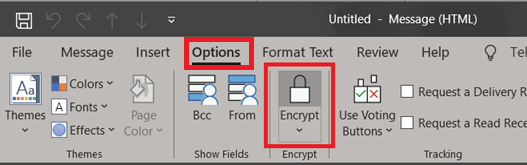
You may not have setup AIP, but still want to protect some of your emails automatically. If you have an Office 365 E3 (or higher) license you can use Encrypt and Do Not Forward rules to protect your emails.

How do I use the Do Not Forward or Encrypt options when I have installed AIPv2 client (Unified labelling)?

Image
This is in no way an AIP/OME article, but since I have gotten a few questions about this I though I could just write a short post about it. 

Things you may want to consider as you “migrate” your AIP labels to sensitivity labels.

Image
I have done a few posts on Unified labeling, and after reading this amazing blog post from Microsoft, I was left with a feeling that there was nothing more to say about Unified labeling. This post covered so much. Still, there are a couple of things you might want to consider before migrating your labels to sensitivity labels.

The user-friendly Information Protection blog post.

Image
The other day I had a thought: How about a blog post about Information Protection for people who are completely new to it? I sometimes hear that one of the things people like about blogs is that they take complicated information and makes it easier to understand and that has always been my ambition with this blog. I’m not claiming to have done that, but points for trying right? 

Enterprise Mobility + Security. A licensing blog post.

Image
“If you have built castles in the air, your work need not be lost; that is where they should be. Now put the foundations under them.” The great Henry David Thoreau released Walden in 1854 about something completely different of course, but I am taking the liberty to use this quote in a cloud computing context. In almost every project I am in, I get this one question: Should we choose EM+S E3 or EM+S E5? And it really is a good question. The license cost is almost double in E5, and yet, the two licenses seems to contain a lot of the same stuff. Most of the time I can tell the customer what is gained by going for E5, but let’s look at some of the important differences here. Licensing can be extremely confusing, and Microsoft is in no way the worst company here.